Welcome to the Website of

a professional society affiliated with the
American Philosophical Association,
Eastern Division

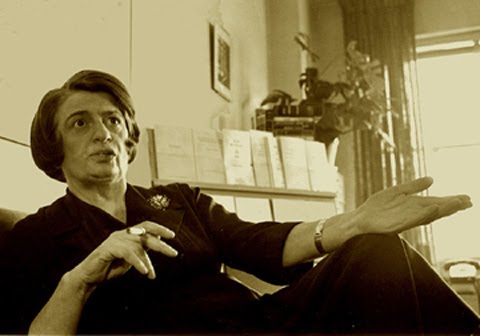
Photo: C. Capra -- Magnum Photos

| Allan
Gotthelf, Chairman |
Lester
H. Hunt |
![]() |
Allan Gotthelf is
Visiting Professor of History and Philosophy of Science at the
University of Pittsburgh, where he holds the University's Fellowship
for the Study of Objectivism. (Serves ex-officio) |
![]() |
Lester H. Hunt is
Professor of Philosophy at the University of Wisconsin, Madison. (Serves through 2013) |
| James
G. Lennox |
Adam
Mossoff |
![]() |
James G. Lennox is
Professor of History and Philosophy of Science at the University of
Pittsburgh. (Serves through 2014) |
![]() |
Adam Mossoff is
Professor of Law at the George Mason University School of Law. (Serves through 2014) |
| Fred
D. Miller, Jr. |
Gregory
Salmieri |
![]() |
Fred D. Miller, Jr. is
Professor of Philosophy at Bowling Green State University, and
Executive Director of the University's Social Philosophy and Policy
Center. (Serves through 2013) |
![]() |
Gregory Salmieri is
Lecturer in Philosophy and Fellow in Objectivity and Values at the
University of North Carolina at Chapel Hill. (Serves through 2012) |
Immediate Past Members
| Robert
Mayhew |
Darryl
Wright |
![]() |
Robert Mayhew is
Professor of Philosophy at Seton Hall University. (Served 2008 - 2011) |
![]() |
Darryl Wright is
Professor of Philosophy at Harvey Mudd College, and Adjunct
Professor at The Claremont Graduate School. (Served 2008 - 2011) |
| 1988 |
Perceptual Appearance:
Realism vs. Representationalism |
| Speaker: Commentator: |
David Kelley (Verbank, NY) Jaegwon Kim (Brown University) |
| 1990 |
The Biological Basis
of Teleological Concepts |
| Speaker: Commentator: |
Harry Binswanger (Ayn Rand Institute) William Bechtel (Georgia State University) |
| 1992 |
Ayn Rand and Kant's
Metaphysics |
| Speaker: Commentator: |
George Walsh (Salisbury State University) Fred D. Miller, Jr. (Bowling Green State University) |
| 1993 | The
Fountainhead: Fifty Years Later |
| Speakers: |
Richard Kamber (Trenton State College) Andrew Bernstein (Pace University) Neera Kapur Badhwar (University of Oklahoma) |
| 1994 |
Multiculturalism and
the Assault on Objectivity |
| Speakers: |
Gary Hull (Claremont Grad. Sch. of
Business) Susan Haack (University of Miami) |
| 1995 |
Recasting
Business Ethics: The Moral Foundations of Business |
| Speaker: Commentator: |
Stephen Hicks (Rockford College) Jan Narveson (University of Waterloo) |
| 1996 |
Egoism and Virtue |
| Speaker: Commentator: |
Lester H. Hunt (University of Wisconsin--Madison) Tara Smith (University of Texas at Austin) |
| 1997 |
Reason and Freedom in Ayn Rand's
Politics |
| Speaker: Commentator: |
Darryl Wright (Harvey Mudd College) Douglas Den Uyl (Bellarmine College) |
| 1998 |
A Philosophical Approach to
Humor: Aristotle and Ayn Rand |
| Speaker: Commentator: |
Robert Mayhew (Seton Hall University) Richard Janko (University of London) |
| 1999 |
Teaching Ayn Rand in
Introductory Courses |
| Speakers: |
Free Will: Allan Gotthelf (The College of New Jersey) Ethical Egoism: Tibor Machan (Chapman University) |
| 2000 |
Book Discussion - Tara Smith's
Viable Values: A Study of Life as the Root and Reward of
Morality |
| Speakers: Responses: |
Irfan Khawaja (University of Notre Dame) David Schmidtz (University of Arizona) Julia Driver (Dartmouth College) Tara Smith (University of Texas at Austin) |
| 2001 |
Reason, Emotion, and the
Importance of Philosophy |
| Speaker: Commentator: |
Wayne A. Davis (Georgetown University) Darryl Wright (Harvey Mudd College) |
| 2003 |
Ayn Rand on Concepts, Essences,
and Scientific Progress |
| Speakers: Commentator: Chairman: |
Allan Gotthelf (University of Pittsburgh) James G. Lennox (University of Pittsburgh) Paul E. Griffiths (University of Pittsburgh) Harry Binswanger (Ayn Rand Institute) |
| 2004 |
Concepts and Universals: Ayn
Rand and Thomas Aquinas |
| Speaker: Commentator: |
Douglas B. Rasmussen (St. John's University) Robert Pasnau (University of Colorado) |
| 2005 |
Ayn Rand as Aristotelian |
| Speakers: Chairman: |
James G. Lennox (University of Pittsburgh) Allan Gotthelf (University of Pittsburgh) Fred D. Miller, Jr. (Bowling Green State University) Robert Mayhew (Seton Hall University) John M. Cooper (Princeton University) |
| 2006 |
Author meets Critics: Tara
Smith's Ayn Rand's Normative Ethics: The Virtuous Egoist
(Cambridge University Press, 2006) |
| Speakers: Responses: |
Helen Cullyer (Center for Hellenic Studies and University of
Pittsburgh) Lester H. Hunt (University of Wisconsin--Madison) Christine Swanton (University of Auckland) Tara Smith (University of Texas at Austin) |
| 2007 |
The Foundations of Ethics:
Objectivism and Analytic Philosophy |
| Speaker: Commentator: |
Irfan Khawaja (University of Notre Dame) Paul Bloomfield (University of Connecticut) |
| 2008 Pacific |
Egoistic
Virtue in Nietzsche and Ayn Rand |
| Speaker: Commentator: |
Christine Swanton (University of Auckland) Darryl Wright (Harvey Mudd, Claremont Colleges) |
| 2008 Eastern |
The
Objectivity of Esthetic Value |
| Speakers: |
Harry Binswanger (Ayn Rand Institute) Bill Brewer (University of Warwick) Mitchell S. Green (University of Virginia) |
| 2009 Pacific |
Reason,
Choice, and the Creation of One's Own Character |
| Speaker: Commentator: |
Onkar Ghate (Ayn Rand Institute) Jonathan Jacobs (Colgate University) |
| 2009 Eastern |
The
Normative Foundations of Intellectual Property: Two Perspectives |
| Speaker: Commentator: |
Adam Mossoff (George Mason University School of Law) Eric R. Claeys (George Mason University School of Law) |
| 2010 Pacific |
Authors
Meet Critics: Essays on Ayn Rand's Atlas Shrugged (ed. R. Mayhew) |
| Introduction: Speakers: Responses: Chair: |
Robert Mayhew (Seton Hall University) William Glod (Institute for Humane Studies) Lester H. Hunt (University of Wisconsin--Madison) Christine Swanton (University of Auckland) Onkar Ghate (Ayn Rand Institute) Allan Gotthelf (University of Pittsburgh) Gregory Salmieri (University of North Carolina at Chapel Hill) Fred D. Miller, Jr. (Bowling Green State University) |
| 2010 Eastern |
Rescheduled
for 2011-2012 |
| 2011 Pacific |
Rand and
Punishment |
| Speaker: Commentator: |
David Boonin (University of Colorado) Irfan Khawaja (Felician College) |
| 2011 Eastern |
The
Philosophic Basis of the Separation of Church and State: Theory
and History |
| Speaker: Commentator: |
Onkar Ghate (Ayn Rand Institute) Mark McGarvie (Univeristy of Richmond [History; Law]) |
| Topic:
Speaker: Commentators: Chair: Location: Date and Time: |
Concepts and the Growth of
Scientific Knowledge: The Case of "Temperature" Travis Norsen (Smith College) Hasok Chang (University of Cambridge) James G. Lennox (University of Pittsburgh) Allan Gotthelf (University of Pittsburgh) Westin Seattle Hotel, Seattle, Washington Thursday, April 5th, 7-10 pm* *Note: the APA Program incorrectly lists the meeting time as 9-11 pm. This will be corrected in the errata distributed at the Registration desk. The correct meeting time is 7-10 pm. |
Ayn Rand Society Philosophical Studies: a series
In furtherance of
its constitutional purpose, ARS has begun
publishing, with the University of Pittsburgh Press, a series of volumes
called Ayn Rand Society Philosophical Studies. Each volume will be
unified around a theme of importance both to philosophy generally and to
Rand’s philosophical system, Objectivism, in particular, and will be
intended to be of interest both to philosophers unfamiliar with Rand and
to specialists in her thought. The volumes will contain, for the most
part, previously unpublished materials that pertain to Rand’s
philosophical work; the aim is to present professional studies that will
advance understanding both of the philosophical issues involved and of
the thought of this seminal and still underappreciated philosopher.
Series editor: Allan Gotthelf (University of Pittsburgh)
Series associate editor: James G. Lennox (University of Pittsburgh)
Editorial board:
Lester H. Hunt (University of Wisconsin, Madison)
Robert Mayhew (Seton Hall University)
Fred D. Miller, Jr. (Bowling Green State University)
Adam Mossoff (George Mason University)
Gregory Salmieri (University of North Carolina, Chapel Hill)
Darryl Wright (Harvey Mudd College [The Claremont Colleges])
1.
Metaethics, Egoism, and Virtue:
Studies in Ayn Rand’s Normative Theory
Allan Gotthelf, editor; James G.
Lennox associate editor
Pittsburgh: University of
Pittsburgh Press, 2011 – release date: November 28, 2010
from the University of Pittsburgh Press website:
Metaethics,
Egoism, and Virtue examines central aspects of Ayn Rand’s
ethical theory. Though her endorsement of ethical egoism is well
known—one of her most familiar essay collections is The
Virtue
of Selfishness—the character of her egoism is not. Leading
Rand scholars and specialists in ethical theory address issues such
as: the basis of Rand’s egoism in a virtue-centered normative ethics;
her account of how moral norms in general are themselves based on a
fundamental choice by an agent to value his own life; and how her own
approach to the foundations of ethics is to be compared and contrasted
with familiar approaches in the analytic ethical tradition.
Philosophers interested in the
objectivity of value, in the way ethical theory is (and is not)
virtue-based, and in acquiring a serious understanding of an egoistic
moral theory worthy of attention will find much to consider here.
| Preface | |
| Reason, Choice, and the Ultimate End | |
| Reasoning about Ends: Life as a Value in Ayn Rand’s Ethics | Darryl Wright |
| The Choice to Value (1990) | Allan Gotthelf |
| Metaethics: Objectivist and Analytic | |
| The Foundations of Ethics: Objectivism and Analytic Philosophy | Irfan Khawaja |
| Egoism and Eudaimonism: Replies to Khawaja | Paul Bloomfield |
| Egoism and Virtue in Nietzsche and Rand | |
| Nietzsche and Rand as Virtuous Egoists | Christine Swanton |
| Virtue and Sacrifice: Response to Swanton | Darryl Wright |
| Author Meets Critics: Tara Smith’s Ayn Rand’s Normative Ethics | |
| Rational Selves, Friends, and the Social Virtues | Helen Cullyer |
| Egoistic Relations with Others: Response to Cullyer | Tara Smith |
| Virtuous Egoism and Virtuous Altruism | Christine Swanton |
| On Altruism, and the Role of Virtues in Rand’s Egoism: Response to Swanton | Tara Smith |
| What Is Included in Virtue? | Lester H. Hunt |
| The Primacy of Action in Virtue: Response to Hunt | Tara Smith |
| Uniform
Abbreviations of Works References List of Contributors Index |
|
From
the book’s back cover:
“This is a superb
collection of essays on Ayn Rand’s metaethics and her theories of value,
virtue, and egoism. The dialogues between leading Rand specialists and
distinguished moral philosophers less familiar with her philosophical
work shed new light on the relationship of her thought to contemporary
analytic philosophy.”
—Fred D.
Miller, Jr., Bowling Green State University
“Ayn Rand’s Objectivist
philosophy is an important cultural force in the United States today and
influential in contemporary political debates. And yet there has been a
dearth of sustained philosophical discussions of Objectivism in the
scholarly literature. Fortunately, this is changing. In Metaethics,
Egoism, and Virtue, a very strong group of philosophers debate
such central questions as how Objectivism approaches the foundations of
ethics and analyzes the nature of value and virtue—including the complex
relationship between rational egoism and altruism. Philosophers
interested in engaging with Objectivism with greater clarity and depth
would do well to start here.”
—Peter
Railton, University of Michigan
“A valuable and exciting project.
Gotthelf and Lennox are universally recognized as being two of the
leading Ayn Rand scholars.“
—Harry
Binswanger, professor of philosophy,
Ayn Rand
Institute
“At long last a book has brought
together specialists in ethical theory and moral psychology with
scholars of Ayn Rand, to engage with Rand’s thought at the highest
levels. These energetic discussions will be of interest to ethicists as
well as social and political thinkers.”
—John David
Lewis, Philosophy, Politics, and
Economics Program, Duke University
2.
Concepts and Their Role in
Knowledge: Reflections on Objectivist Epistemology
Allan Gotthelf, editor; James G.
Lennox associate editor
Pittsburgh: University of
Pittsburgh Press, forthcoming
| Preface | |
| PART ONE |
|
| Ayn Rand's Theory of Concepts: Rethinking Abstraction and Essence | Allan Gotthelf |
| Conceptualization and
Justification |
Gregory Salmieri |
| Perceptual Awareness as
Presentational |
Onkar Ghate |
| Concepts, Context, and the
Advance of Science |
James G. Lennox |
| PART TWO |
|
| Concepts and Kinds |
|
| Rand on Concepts,
Definitions, and the Advance of Science: Comments on Gotthelf and
Lennox |
Paul E. Griffiths |
| Natural Kinds and Rand's
Theory of Concepts: Reflections on Griffiths |
Onkar Ghate |
| Definitions |
|
| Rand on Definitions--"One
Size Fits All"? |
Jim Bogen |
| Taking the Measure of a
Definition: Response to Bogen |
Allan Gotthelf |
| Concepts and
Theory Change |
|
| On Concepts that Change
with the Advance of Science |
Richard Burian |
| Conceptual Development
versus Conceptual Change:Response to Burian |
James G. Lennox |
| Perceptual
Awareness |
|
| In Defense of the Theory
of Appearing: Comments on Ghate and Salmieri |
Pierre LeMorvan |
| Forms of Awareness and
"Three-Factor" Theories |
Gregory Salmieri |
| Direct Realism and
Salmieri's "Forms of Awareness" |
Bill Brewer |
| Keeping up Appearances:
Reflections on the Debate Over Perceptual Infallibilism |
Benjamin Bayer |
| Uniform
Abbreviations of Works References List of Contributors Index |
|
Ayn Rand was born Alisa Zinovyevna Rosenbaum on 2 February 1905 in St. Petersburg, Russia, to middle-class, cultured, largely non-observant Jewish parents. At age 16 she entered Petrograd University, graduating three years later, in 1924; history was her major subject and philosophy her special interest. She subsequently studied for a year at the State Technicum for Screen Arts. In early 1926 she emigrated to the United States, and eventually took up residence in Hollywood, where she changed her name to Ayn Rand. She worked initially as a screen writer for the Cecil B. DeMille studios. Her first play, Night of January 16th, was produced on Broadway in 1935, and the first of her four novels, We the Living, was published in 1936. Anthem followed in 1938, The Fountainhead in 1943, and Atlas Shrugged, her magnum opus, in 1957.
In 1951, Rand moved permanently to New York City. After the publication of Atlas Shrugged, she turned to nonfiction, elaborating on the philosophy expounded in the novels and applying it to current cultural and political issues. She lectured widely at universities and colleges and to private groups throughout the U.S., and wrote numerous essays, many published in periodicals she edited or co-edited: The Objectivist Newsletter (1962–65), The Objectivist (1966–71), and The Ayn Rand Letter (1971–76). The philosophical speeches from her novels, and her philosophic essays and lectures, became the basis for a series of seven book-length collections, starting in 1961. Rand died on 6 March 1982 in New York City.
Original manuscripts of Rand’s novels are in the Library of Congress. Most of her surviving papers and documents are held in the Ayn Rand Archives, a department of the Ayn Rand Institute in Irvine, California. Rand’s books have sold over twenty million copies; readers often speak of her novels as having changed their lives. A growing number of academic philosophers are taking an interest in her work.
In an afterword to Atlas Shrugged Ayn Rand said: “My philosophy, in essence, is the concept of man as a heroic being, with his own happiness as the moral purpose of his life, with productive achievement as his noblest activity, and reason as his only absolute.” We start from this essentialized statement, then work back to the fundamentals of her entire philosophic system, then forward to an integrated overview of the whole.
Rand’s concept of man as a heroic being – her vision of human beings as able to achieve great things, and of the universe as open to their efforts -- is a hallmark of her thought, and certainly a significant part of her widespread appeal. Happinessshe holds to be the emotional state that results from the achievement of objective values. Such values and the means to them can only be identified by reason, and Rand holds that they cannot be achieved without such virtues as independence, integrity, honesty, justice, productiveness, and pride.
Rand’s virtue-focused rational egoism differs from traditional eudaimonism in that Rand regards ethics as an exact science. Rather than deriving her virtues from a vaguely defined human function, she takes “Man’s Life” – i.e. that which is required for the survival of a rational animal across its lifespan – as her standard of value. This accounts for the nobility she ascribes to production – “the application of reason to the problem of survival” (1966, p. 9). For Rand, reason is man’s means of survival, and even the most theoretical and spiritual functions – science, philosophy, art, love, and reverence for the human potential, among others – are for the sake of life-sustaining action. This, for her, does not demean the spiritual by “bringing it down” to the level of the material; rather, it elevates the material and grounds the spiritual.
The foundation of Rand’s philosophy is a thesis which has often been called “metaphysical realism,” and which she callsthe primacy of existence. It states that “reality, the external world, exists independent of man’s consciousness...this means that A is A, that facts are facts, that things are what they are – and the task of man’s consciousness is to perceive reality not to create or invent it.” Rand argues that this metaphysics is axiomatic – that it is contained in all knowledge and so presupposed in any attempt to deny it.
Following Aristotle, Rand views the world as made up of individual entities, and understands causality as the relationship between an entity and the actions necessitated by its nature. Choice is a type of causality. It is the nature of reason, our distinctive form of consciousness, to be volitional; its operation is up to us.
Rand draws a sharp distinction between that which is caused by human choice – “the man-made,” and that which is not – “the metaphysically given.” Metaphysically given facts cannot be judged and man-made phenomena must be. Epistemology and ethics are concerned with providing standards for the man-made in their respective realms, viz. knowledge and action.
Rand's epistemology rests on a distinction between the automatic, metaphysically given knowledge of sense-perception, and the volitional, man-made, products of reason. Perception is a form of awareness that results inexorably from a causal interaction of the perceiver with his environment. As such, it cannot be judged and serves as an epistemological given on which conceptual knowledge will be built. Epistemology for Rand is a normative discipline describing how to build conceptual knowledge on perceptual. The basic principle of her epistemology is that “the rules of cognition must be derived from the nature of existence and the nature, the identity, of [man’s] cognitive faculty.” (Introduction to Objectivist Epistemology, 1990, p. 82)
Rand defines reason as “the faculty that identifies and integrates the material provided by man’s senses” (VOS hb edn. 1965, p. 13). With our senses we perceive entities (including their attributes). Reason identifies these existents byinterrelating them. For example, Newtonian physics interrelates the perceived motions of falling apples and wandering planets. To grasp such far-flung connections we need to deal with a vast quantity of information. However, Rand observes, we are only able to hold a limited number of discrete items in mind at once. This limitation creates a need for “unit economy,” which is fulfilled by concepts, the basic units of thought.
A concept, Rand holds, is a man-made integration of similar existents in the form of a single mental entity – a unitary awareness of indefinitely many existents of the same kind. The concept “man,” for example, enables us to think and learn about all men (past, present and future) at once; and to call someone a man is to bring the whole of our knowledge about men (medical, psychological, philosophical, etc.) to bear on him.
Rand presents her theory of concept formation in Introduction to Objectivist Epistemology (ITOE), published first as a multi-part series in The Objectivist in 1966–67, and then as a monograph in 1967. Properly formed concepts unit-economize by integrating similar existents. Rand analyses similarity as a matter of variation in degree or measurement along a quantitative axis. Two items are similar, relative to a third, when their differences in measurement are comparatively insignificant. We form concepts by isolating a group of similar existents (or “units”) by differentiating them from foils, and then integrating the units by omitting their particular measurements. In omitting these measurements we do not turn our attention away from their differences to some underlying sameness. Rather, we interrelate the units (and a potential infinity of other units) by projecting a range along the quantitative axis. The integration is retained by means of a word, and the units’ differentiation from all other existents is maintained by a definition in traditional genus-differentia form.
Our first concepts are formed by integrating perceived entities or their attributes. These concepts then form the basis for wider integrations and more precise differentiations, resulting in a complex conceptual hierarchy. In ITOE, Rand lays out the process of concept formation in detail, and explains how it applies to various sorts of concepts including concepts of entities, actions, attributes, materials, conscious phenomena and philosophical axioms. She describes the methods of proper definition and discusses when it is valid to form a new concept. A 1979 reprinting of ITOE includes an essay by Leonard Peikoff, written from the standpoint of Rand’s theory of concepts, that attacks the analytic-synthetic dichotomy. An expanded second edition, published in 1990, includes extensive excerpts from epistemology workshops Rand gave during 1969–71 for a group of philosophers and graduate students.
Rand argues that traditional theories of concepts either reify concepts (realism), or else make concepts arbitrary (conceptualism and nominalism). On her view, concepts are man-made, but they are made in order to apprehend reality, and so must be formed in the specific manner demanded by the nature of consciousness and of its objects. When so formed, concepts are neither intrinsic features of reality nor subjective creations of consciousness. They are objective“products of a cognitive method of classification whose processes must be performed by man, but whose content is dictated by reality.” (1990, p. 54)
The very integration of a concept’s units depends on knowledge of the contrasting foils. And the similarities on which abstract concepts are based can only be grasped on the basis of a chain of prior concepts (terminating with ones formed directly from perception). Because of these facts, concepts are only meaningful in the context of a vast hierarchical system. If we don’t define our concepts properly, there is a danger of “stealing” concepts – of using them in disregard for their place in the hierarchy, rendering them cognitively meaningless.
Rand’s ethics is founded on an argument that the concept “value” depends on the concept “life” and so is only meaningful in the context of an organism pursuing its life as its ultimate value. Animals automatically desire what they need to survive, but human desires are based on volitional thinking. So, each person must adopt his life as his ultimate value, and then choose to discover and enact the means necessary to achieve it. Someone who does not pursue life can have no values at all, and is irrelevant to ethics.
Because of the quantity of information involved, we cannot assess the survival impact of actions considered as isolated particulars. We need to proceed conceptually, discovering the broad categories of values man’s survival requires, and what virtues are necessary to achieve them. We need a code of values with “man’s life” as its standard.
Rand identifies three cardinal values: Reason, Purpose, and Self-esteem, with the corresponding virtues of Rationality, Productiveness, and Pride. Reason is our means of survival. Rationality is the acceptance of reason as one’s only source of knowledge and guide to action. Rationality requires a person to do his own thinking (independence) and stay true to it inaction (integrity). It requires honesty – the refusal to fake reality – because the unreal does not exist and can be of no value. It requires justice – the moral evaluation of others – because rational, productive people are good for us, while irrational parasites are worthless or dangerous.
Survival requires an all-encompassing purposefulness, with all of one’s other purposes integrated to a central productive purpose. Productiveness is the application of reason to the creation of the products and services necessary for survival. To define and achieve rational purposes, a person must be certain of his competence and worth – he must achieve self-esteem. This requires the virtue of pride – a commitment to living up to the highest rational standards. Thus Rand calls pride “moral ambitiousness.” It is, in effect, productiveness applied to one’s character: “as man is a being of self-made wealth, so he is a being of self-made soul” (1957, p. 1020).
The knowledge one man discovers and the goods or services he produces can be of great benefit to another, and the character a man cultivates in himself can make him of profound spiritual value as a friend or romantic partner. Rational men, says Rand, approach one another as traders, offering values they have created in exchange for the values they seek, each appealing to the rationality and self-interest of the other. (What one offers to a friend or romantic partner is one’s own character and one’s admiration or love for his.) By contrast, parasites, who seek or seize the unearned, give the men from whom they might have benefited every reason to turn away from them or to turn against them. Parasitism is never in one’s interest. When men recognize this and formulate their goals accordingly, their interests do not conflict and all the benefits of social existence are possible.
The values that each individual seeks from social existence are valuable only as means to his own life, and these values exist only because someone else created them to further his life. Society must therefore be organized so as to leave each man free to create and enjoy the values his life requires. This requires the identification of rights—“moral principle[s] defining and sanctioning a man’s freedom of action in a social context.” (VOS hb edn.1965, p. 124). The basic right is the right to life—i.e., the right “to take all the actions required by the nature of a rational being for the support, the furtherance, the fulfillment and the enjoyment of his own life.” The right to life entails rights to liberty (the freedom to act on the basis of one’s own reasoning) and property (the freedom to exclusive use and disposal of the values one has produced). The only means by which one man (or group of men) can deprive another of his life, liberty, or property is physical force; the initiation of such force must therefore be prohibited. The function of government is to protect rights by enforcing this prohibition. Any other governmental action would constitute an initiation of force, from which it follows that the only moral political system is laissez-faire capitalism. Rand’s politics is thus inseparable from her ethics.
Rand criticizes prior ethicists for conceiving of values as either intrinsic (as in Plato, Moore, and religious traditions) or assubjective (hedonism, utilitarianism, Nietzsche, pragmatism, etc.). On her view values are objective. Values (like concepts) are formed by a consciousness in accordance with the facts of reality. To be a value something must be identified by an agent as furthering his life. The identification is man-made, as is the choice to live that gives it meaning. But the relationship between the value and the agent’s life is metaphysically given, as is the need to identify this relationship conceptually.
Atlas
Shrugged (1957)
The Fountainhead (1943)
Anthem (1938, 1946)
We the Living (1936,
1959)
Books and Essays
Philosophy:
Who Needs It (1982)
Introduction to Objectivist Epistemology, 2nd edn. (1990)
The Virtue of Selfishness: A New Concept of Egoism (1964)
Capitalism: The Unknown Ideal (1966)
Return of the Primitive: The Anti-Industrial Revolution (1998)
The Romantic Manifesto: A Philosophy of Literature (1969)
For the New Intellectual: The Philosophy of Ayn Rand (1961)
The Voice of Reason: Essays in Objectivist Thought (1988)
Selections
The
Ayn Rand Lexicon, ed. H. Binswanger (1986)
The Ayn Rand Reader, ed. G. Hull and L. Peikoff (1999)
Journals, Letters, and Marginalia
Journals
of Ayn Rand, ed. D. Harriman (1997)
Letters of Ayn Rand, ed. M.S. Berliner (1995)
Ayn Rand's Marginalia, ed. R. Mayhew (1995)
Lecture Course Transcripts
The
Art of Fiction: A Guide for Writers and Readers, ed. Tore
Boeckmann (2000)
The Art of Nonfiction: A Guide for Writers and Readers, ed.
Robert Mayhew (2001)
Exposition
based on extensive discussions with,
and a lecture course authorized by, Ayn Rand
Objectivism: The Philosophy of Ayn Rand, L. Peikoff (1991)